Understanding Crochet Patterns: A Comprehensive Guide to PDFs
Crochet patterns are increasingly available as PDF downloads, offering convenience and accessibility for crafters. This guide will help you navigate these digital resources,
decoding symbols, terms, and charts to successfully complete your projects. Learning to read crochet patterns unlocks a world of creative possibilities,
from simple stitches to intricate designs, all conveniently contained within a downloadable PDF file.
What are Crochet Patterns in PDF Format?
Crochet patterns in PDF format are digital documents containing instructions for creating crochet projects. These files typically include written instructions, stitch diagrams (charts), and often, photographs of the finished item. They’ve become incredibly popular due to their ease of distribution and immediate accessibility after purchase or download.
A PDF allows designers to present complex stitch patterns and detailed instructions in a visually clear and organized manner. Many PDFs include a list of materials needed, gauge information, and helpful tips. The charts utilize symbols to represent different stitches, offering a visual alternative to written instructions. Understanding these symbols is key to successfully following the pattern.
Essentially, a PDF crochet pattern is a portable, printable, and readily available resource for any crochet enthusiast, offering a convenient way to learn and create beautiful handmade items.
Why Use PDF Crochet Patterns?
PDF crochet patterns offer numerous advantages for crafters. Firstly, they provide instant access – no waiting for shipping! Once purchased, the pattern is immediately available for download. Secondly, PDFs are easily printable, allowing you to work directly from a physical copy, marking it up as needed. This is particularly helpful for complex designs or when working on the go.
Furthermore, PDFs often include detailed charts and symbols, offering a visual representation of the stitches, which can be easier to follow than written instructions alone. They are also environmentally friendly, reducing paper waste compared to traditional printed patterns. Many designers offer free PDFs as introductory projects, allowing you to test your understanding of their style and instructions.
Ultimately, PDF crochet patterns combine convenience, clarity, and accessibility, making them a preferred choice for both beginner and experienced crocheters.
Decoding Crochet Pattern Layouts
Crochet pattern PDFs typically follow a standard structure, including sections for materials, gauge, abbreviations, and stitch instructions, aiding comprehension and project success.
Standard Sections in a Crochet Pattern PDF
Crochet pattern PDFs generally include several key sections designed to guide you through the project. First, you’ll find a list of required materials – yarn weight, color, and quantity, plus hook size and any notions needed. Next is the gauge information, crucial for achieving the correct size; a test swatch is highly recommended!
Following this, expect a section detailing essential abbreviations and terms used throughout the pattern. The stitch instructions themselves are usually broken down by row or round, clearly outlining each step. Many patterns also include special stitch instructions with links to helpful tutorials.
Finally, finishing instructions and any blocking guidance are provided. Understanding where to find this information within the PDF streamlines the reading process and ensures a smoother crocheting experience.
Key Elements: Pattern Name, Designer, and Skill Level
When opening a crochet pattern PDF, immediately note the pattern name – this helps with organization and referencing. Identifying the designer is important for respecting copyright and discovering more of their work. Crucially, pay attention to the stated skill level: beginner, intermediate, or advanced.
This indicates the complexity of stitches and techniques involved. Beginners should start with patterns labeled “easy” or “beginner-friendly” to build confidence. The PDF may also include a finished size, allowing you to adjust yarn and hook size if needed.
These initial details provide context and help you determine if the pattern aligns with your current abilities and project goals, ensuring a more enjoyable crocheting journey.
Mastering Crochet Symbols
Crochet patterns often utilize symbols representing stitches, streamlining instructions. Understanding these symbols – found in charts and PDFs – is vital for accurate pattern interpretation and successful projects.
Common Crochet Stitch Symbols
Crochet stitch symbols are a visual language within patterns, simplifying complex instructions. A basic circle typically represents a single crochet (sc), while a circle with a small loop indicates a chain stitch (ch). Double crochet (dc) is often shown as a taller symbol, resembling a slightly elongated circle. Treble or triple crochet (tr) is even taller.
Half double crochet (hdc) falls between sc and dc in height and symbol representation. Slip stitch (sl st) is usually a short, slanted line. Recognizing these core symbols is the first step to reading crochet charts effectively. Many PDF patterns include a key defining each symbol used, ensuring clarity. Familiarizing yourself with these common representations will significantly improve your ability to decipher crochet patterns and enjoy the crafting process.
Understanding Chart Symbols for Different Stitches
Beyond basic stitches, crochet charts employ symbols for more complex techniques. Front post and back post stitches are often indicated with vertical bars alongside the stitch symbol. Puff stitches might be represented by a cluster of circles. Bobbles, popcorns, and other textured stitches have unique symbols denoting their construction.
Understanding these variations is crucial for accurate pattern interpretation. PDF patterns frequently include a comprehensive key explaining each symbol’s meaning. Pay close attention to any shading or internal markings within a symbol, as these can indicate specific instructions, like working around a post. Mastering these nuanced symbols unlocks the ability to tackle intricate crochet designs with confidence and precision.
Navigating Crochet Abbreviations
Crochet patterns heavily utilize abbreviations to conserve space within PDF documents. Familiarizing yourself with these common shorthand terms is essential for successfully following a pattern’s instructions.
Essential US Crochet Abbreviations
Understanding US crochet abbreviations is crucial when working with PDF patterns designed for an American audience. Common abbreviations include: ch (chain), sc (single crochet), hdc (half double crochet), dc (double crochet), tr (treble/triple crochet), inc (increase), dec (decrease), sl st (slip stitch), and st(s) (stitch/stitches).
These abbreviations represent specific crochet stitches and techniques. A pattern might instruct you to “ch 10,” meaning to create a chain of ten stitches. Similarly, “sc in next st” directs you to single crochet into the following stitch. Recognizing these terms allows you to efficiently follow the pattern’s instructions and accurately create your project. Many PDFs include a key defining these abbreviations, but memorizing the most frequent ones will significantly speed up your crochet process.
Essential UK Crochet Abbreviations (and Conversion)
If encountering a PDF crochet pattern originating from the UK, be aware of differing abbreviations. UK terms often differ from US terms, potentially causing confusion. Key UK abbreviations include: ch (chain – same as US), sc (single crochet – US double crochet), dc (double crochet – US half double crochet), tr (treble crochet – US double crochet), dtr (double treble crochet – US treble crochet), inc (increase – same as US), dec (decrease – same as US), and sl st (slip stitch – same as US).
To successfully follow a UK pattern, conversion is essential. Understanding these differences prevents errors and ensures your project matches the intended design. Numerous online resources provide conversion charts, simplifying the translation between UK and US terminology. Familiarizing yourself with both systems expands your access to a wider range of crochet patterns available in PDF format.
Reading Crochet Charts
Crochet charts visually represent patterns, using symbols for stitches and color-coding for rounds or rows within a PDF. They offer an alternative to written instructions.
How Crochet Charts Represent Rounds and Rows
Crochet charts utilize a grid system to visually map out your project, with each square representing a stitch. Rounds are typically depicted in a circular or spiral fashion, progressing outwards from the center. Each complete circuit of the circle signifies one round completed. Rows, common in projects worked back and forth, are displayed horizontally, with each row building upon the previous one.
Numbered markers alongside the chart indicate the round or row number, guiding you through the sequence. Arrows often show the direction of work, clarifying whether to move clockwise or counter-clockwise for rounds, or left to right for rows. Understanding this visual language is key to successfully interpreting a crochet pattern PDF and bringing your design to life. The chart is a powerful tool for visualizing the finished product.
Understanding Color Coding in Crochet Charts
Color coding in crochet charts is a valuable tool for deciphering complex patterns. Different colors typically represent different stitch types or yarn colors used throughout the project. A key or legend accompanying the chart will explain which color corresponds to which stitch – for example, blue for single crochet, green for double crochet, and so on.
This visual cue simplifies the reading process, allowing you to quickly identify the stitches needed for each section. Some charts also use color to indicate changes in yarn, making it easier to follow multi-colored designs. Mastering this color-coded system is crucial for accurately interpreting a crochet pattern PDF and achieving the intended result. It enhances clarity and reduces errors.
Working with Special Stitches
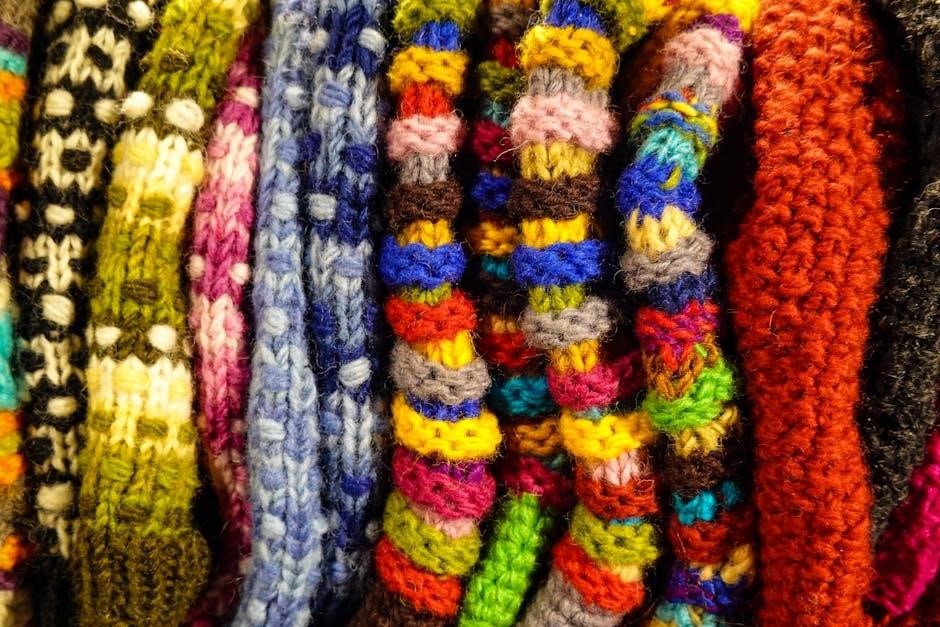
Crochet patterns often include special stitches beyond the basics. Instructions will detail how to create these, and online tutorials provide visual guidance for clarity.
Identifying Special Stitch Instructions
Crochet patterns frequently incorporate special stitches that deviate from standard techniques. These instructions are typically set apart within the PDF, often introduced with a descriptive name like “puff stitch” or “shell stitch.” Look for detailed, step-by-step written explanations accompanying these stitches.
Pattern designers may also use abbreviations for special stitches, defining them in a key or glossary section of the PDF. Charts sometimes visually represent special stitches with unique symbols, cross-referenced to a corresponding legend. Pay close attention to any parenthetical notes or diagrams that clarify the stitch construction. Recognizing these cues is crucial for accurately interpreting the pattern and achieving the desired result.
Often, the first time a special stitch appears, it will be explained in great detail, while subsequent mentions will simply refer to the abbreviation.
Finding Tutorials for Special Stitches
When encountering unfamiliar special stitches within a crochet pattern PDF, numerous online resources can provide visual guidance. YouTube is an invaluable platform, hosting countless video tutorials demonstrating various techniques, often specifically linked to popular patterns. Websites and blogs dedicated to crochet frequently feature detailed photo tutorials and written explanations.
Searching for the stitch name (e.g., “puff stitch tutorial”) will yield a wealth of options. Many pattern designers also include links to helpful tutorials directly within their PDFs. Don’t hesitate to explore multiple resources to find an explanation that resonates with your learning style.
Practicing the special stitch separately before incorporating it into your project ensures confidence and accuracy. Remember to check the tutorial’s stitch terminology (US vs. UK) to match your pattern.

Resources for Learning Crochet Patterns
Online crochet pattern databases and beginner-friendly websites offer extensive support. Blogs provide tutorials, while PDF guides clarify symbols and terms, enhancing your pattern-reading skills.
Online Crochet Pattern Databases
Numerous online databases serve as invaluable resources for accessing and learning to interpret crochet patterns in PDF format. Websites like Ravelry boast extensive collections, allowing users to search patterns by difficulty, yarn weight, and stitch type. These platforms often include project notes and photos from other crocheters, offering insights into potential challenges and modifications.
LoveCrafts and Yarnspirations are also popular choices, providing a curated selection of patterns alongside yarn purchasing options. Many designers offer free patterns directly on their websites, providing excellent opportunities to practice reading different styles and formats. When exploring these databases, pay attention to user reviews and comments, as they can highlight any ambiguities or errors within the PDF. Utilizing these resources will significantly improve your ability to confidently decipher and execute crochet patterns.
Helpful Websites and Blogs for Crochet Beginners
Several websites and blogs cater specifically to those new to reading crochet patterns in PDF format. The Spruce Crafts offers comprehensive tutorials covering basic stitches, abbreviations, and chart reading. Bella Coco Crochet provides clear, step-by-step video tutorials, visually demonstrating how to interpret pattern instructions.
Blogs like CrochetKim and Moogly Blog frequently feature beginner-friendly patterns with detailed explanations and accompanying photos. These resources often break down complex techniques into manageable steps, making the learning process less daunting. Look for websites that offer PDF pattern guides specifically designed for novices, focusing on understanding symbols and abbreviations. Consistent practice with these resources will build your confidence and skill in deciphering crochet patterns.